Passionate Occupational Therapy Practitioner, Educator, & Researcher
University of Missouri, Dept. of Occupational Therapy: BHS-OTA
Assistant Teaching Professor
MY WHY
Occupational therapy drew me in because it sits at the intersection of science, creativity, problem-solving, and human connection.
Occupational therapy practitioners have the unique opportunity to understand not only a person’s diagnosis or limitations, but also who they are, what matters to them, and what meaningful participation looks like in their everyday life. At its core, occupational therapy is about helping people engage in the occupations that give their lives purpose, identity, independence, and connection.
As an educator, my why expanded.
Teaching future occupational therapy practitioners allows me to contribute not only to the clients we serve today, but to the profession we build for tomorrow. I believe students learn best through authentic experiences that challenge them to think critically, reflect intentionally, collaborate meaningfully, and apply knowledge in real-world contexts.
My goal is to help develop practitioners who demonstrate strong clinical reasoning, evidence-informed decision making, ethical practice, professional confidence, and a deep commitment to client-centered care. I strive to create learning environments that are rigorous, engaging, and supportive while preparing students to navigate complexity with curiosity, competence, and humanity.
The experiential learning examples below illustrate how these values are intentionally integrated throughout my courses to support student growth, professional identity development, and readiness for contemporary occupational therapy practice.
TEACHING PHILOSOPHY
I believe occupational therapy education should move beyond memorization and toward transformation.
Students learn most deeply when they actively engage with content, connect classroom concepts to authentic experiences, and apply knowledge in meaningful contexts. My teaching philosophy is grounded in experiential learning, clinical reasoning development, reflective practice, and evidence-informed decision making.
Across courses, I intentionally design opportunities for students to move beyond passive learning through simulation, movement laboratories, case-based discussions, ethical problem solving, peer teaching, reflective writing, community engagement, and authentic application of occupational therapy principles. These experiences are designed to help students integrate foundational knowledge with clinical judgment while building confidence and adaptability.
I strive to create learning environments that balance challenge with support and encourage curiosity, accountability, collaboration, and growth. Students are expected to think critically, communicate professionally, engage respectfully with diverse perspectives, and develop the habits of lifelong learners.
Ultimately, my goal is to prepare practitioners who are not only clinically competent, but who are reflective, occupation-centered, ethically grounded, and equipped to contribute meaningfully to the individuals and communities they serve.

Hands-On Learning
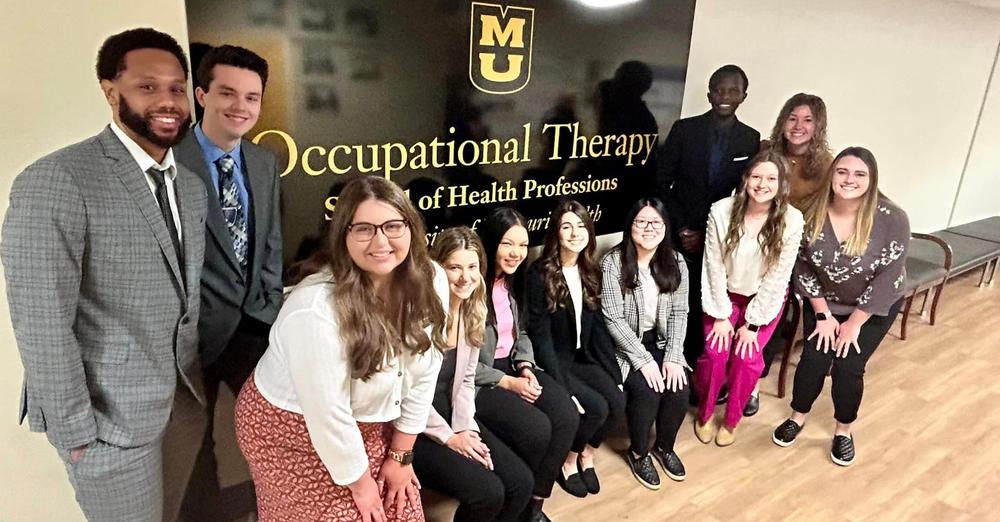
I strive to immerse the University of Missouri Bachelor of Occupational Therapy Assistant students in opportunities that will prepare them to exceed expectations during fieldwork experiences and facilitate success as clinical practitioners.
The Class of 2024 students observed several University of Missouri Healthcare System ICUs. This is a unique experience that allows students to see different lines, leads, ventilation systems, lifts, and medical equipment, as well as the interdisciplinary teamwork that occurs in high-acuity situations and medical facilities.
Adult Rehabilitation
In the OTA Practice in Physical Rehabilitation course, students participate in weekly hands-on learning and labs. These labs include splinting with a content expert, opportunities to work with a prosthetist to learn about the prosthesis process and scope of OT in prosthetic management. Additionally, students review and participate in rehabilitation best practice for multiple diagnoses. These learned experiences are challenged through role plays, which require peer feedback and experienced feedback from the course instructor and OTA faculty.
It is important to allow students the opportunity to "fail" in a safe environment in order to learn from mistakes. Through these courses and others, students develop professional identity, including professional behaviors of giving and receiving feedback.

Experiential Learning & Collaboration
Within the Occupational Therapy Department at the University of Missouri, OT and OTA collaboration is key to developing strong practitioners prepared to collaborate in an interprofessional and intra-professional manner.
It is important that OTA students learn to advocate for themselves, the OTA role, and the profession. OTA students are allowed the opportunity to share their expertise in areas with Occupational Therapy Doctorate students, including education on the role and scope of the OTA and OTA students provide additional labs outside of class time to lead OTD students in transfer training (under the supervision of faculty). Furthermore, OTA students participate in Inter-Professional Education experiences with other healthcare professions within the MU College of Health Sciences.
OTA-BHS Students
A Day in the Life